Execution of Montagu, Henry Courtenay, and Edward Neville
The King's CurseThe execution of Lord Montague, Henry Courtenay, and Edward Neville was reported to Margaret Pole as a royal act of mercy, though its distinction from a harsher punishment was only the place of execution. Her dry-eyed response and insistence on their innocence turn the announcement into an indictment of a verdict presented without an answer to her question about whether the men pleaded guilty.
The Verdict and Its Limits
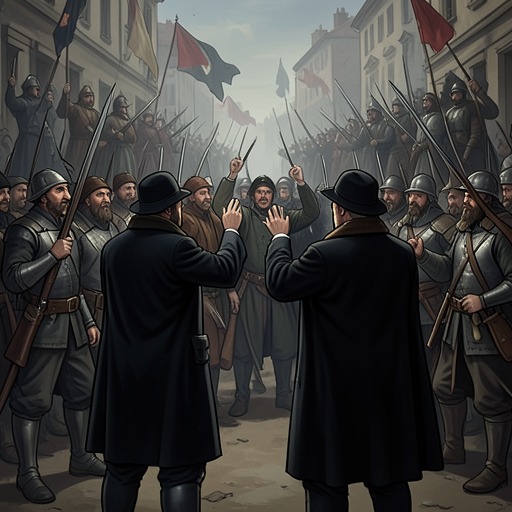
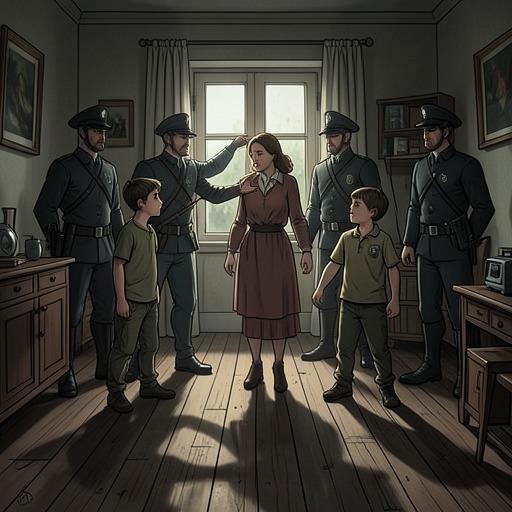
A messenger came to Margaret’s room and told her that her son, Lord Montague, was dead. He said that Lord Montague and his cousins Henry Courtenay and Edward Neville had been brought before their peers, tried, and found guilty of treason against the king. Margaret asked whether they had pleaded guilty. The messenger repeated that they had been found guilty, leaving her question unanswered.
Margaret’s response was not to accept the verdict as proof. She stated that her son and his cousins were innocent of treason against the king. The difference between a finding of guilt and an answer about a plea is central to the scene: the official account supplies a sentence, but not the evidence or admission Margaret asks about.
The Meaning of Mercy
When the messenger said the king had shown the men mercy, Margaret seized on the word. The alleged mercy consisted of allowing them to be executed on Tower Hill rather than at Tyburn. The choice of place softened nothing for a mother told that her son had been put to death; instead, it exposes how the language of clemency can coexist with an irreversible punishment.
Margaret remained composed as she questioned the messenger. After asserting the men’s innocence, she asked where Henry Courtenay’s wife and son were. The messenger admitted that they were still in the Tower of London. The executions therefore did not end the family’s peril: Henry’s wife and child remained imprisoned even as the deaths of the men were reported.
The Wider Reprisal
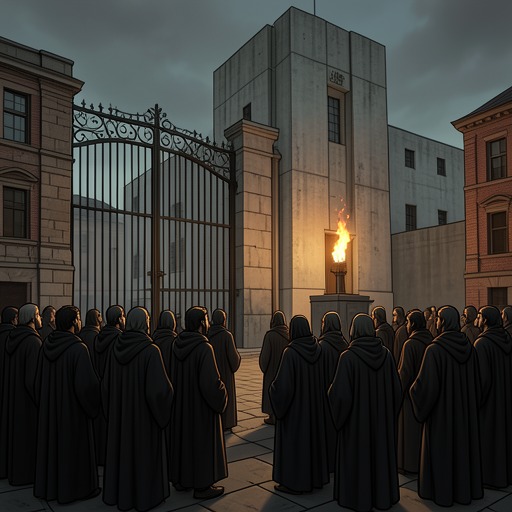
Mabel later taunted Margaret with the full list of deaths. George Croftes, John Collins, and Hugh Holland had been hanged, drawn, and quartered at Tyburn, and their heads set on London Bridge. Lord Montague was beheaded on Tower Hill, followed to the scaffold by Henry Courtenay and Edward Neville, who were also executed by the axe. The different punishments and sites make the royal claim of mercy especially stark: Tower Hill was presented as a concession, while the other condemned men suffered the more prolonged penalty at Tyburn.
Margaret answered Mabel by framing the executions as death in place of evidence. That reply gathers the scene’s central conflict into a single contrast: the authorities declare treason and guilt, while Margaret maintains innocence and points to the absence of an adequate answer. The episode presents the executions not as a settled demonstration of justice, but as a family’s experience of a verdict whose force is unmistakable and whose proof remains unshown.